
 EN
EN

Many B2B sellers reach a ceiling with generic catalog sales long before demand slows down. Margins tighten, price competition gets harsher, and customers treat products as interchangeable. The shift to private label offerings should not begin because it sounds fashionable; it should begin when your current model no longer supports predictable growth, account retention, or pricing power. The right timing is a strategic decision based on commercial signals, operational control, and customer behavior.
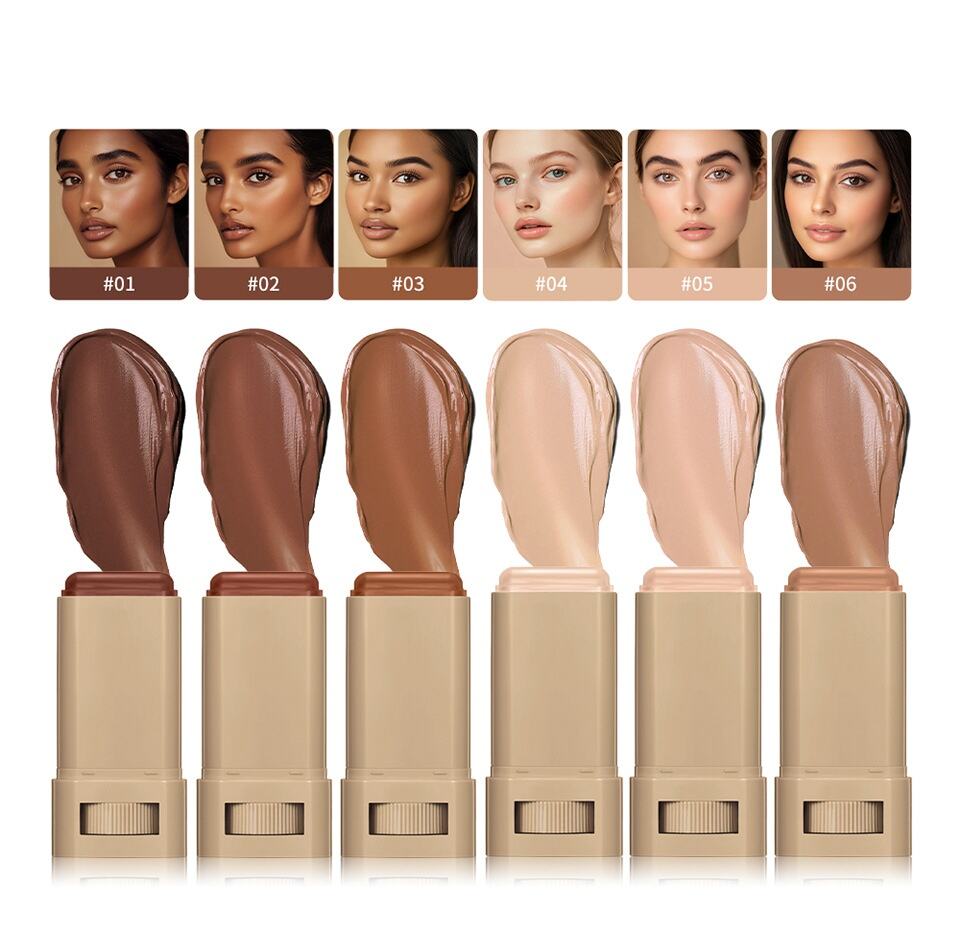
If your business is asking when to move from selling goods to building a brand, the answer is usually not tied to company age. It is tied to readiness conditions that show your organization can convert volume into equity. Private label offerings work best when customer demand is stable enough to support differentiation, your supply chain can maintain consistency, and your team can execute positioning beyond simple product listing management.
Strategic Signals That Your Current Model Has Reached Its Limit
Margin pressure that cannot be fixed by negotiation alone
One of the clearest timing indicators is recurring margin compression across multiple SKUs, even after freight, packaging, and order-flow optimization. When every quarterly review ends with lower unit economics, generic sales become a defensive game. At that stage, private label offerings create room to reset pricing logic from cost comparison to value comparison.
In practical terms, buyers stop negotiating only on ex-works numbers when the product carries a defined brand identity, clearer promise, and more controlled presentation. This does not eliminate procurement discipline, but it changes negotiation context. Private label offerings give commercial teams a credible reason to protect margin through positioning instead of repeated discount cycles.
Low customer loyalty despite strong transaction volume
Some distributors and importers process high order counts but still experience weak repeat behavior on specific product lines. That pattern means customers are buying availability, not preference. When retention is unstable, private label offerings can convert anonymous volume into recognizable value that customers reorder intentionally.
A useful signal is when clients ask for replacements only by function, not by identity. If they would switch immediately to any similar listing, your business has limited defensive moat. Private label offerings become timely when account managers need stronger tools for loyalty conversations, category expansion, and longer contract cycles.
Category maturity with clear room for differentiation
Timing is favorable when the category is mature enough that buyers understand baseline specifications, yet still fragmented in presentation quality. In this environment, private label offerings can stand out through consistency, packaging architecture, and clearer product logic. You are not trying to educate the market from zero; you are helping buyers choose with less friction.
This is especially important in industrial and B2B-adjacent consumer categories where procurement teams want fewer returns and fewer quality disputes. Private label offerings can encode expected performance into a repeatable standard, which reduces ambiguity during reorder decisions and shortens the sales cycle over time.
Operational Readiness Required Before You Upgrade
Quality control and specification discipline are already stable
You should move when your current operation can hold specifications consistently across batches and seasons. Branding amplifies both strengths and weaknesses, so unstable quality will damage trust faster under private label offerings than under generic trade. Readiness means you can define tolerances, inspect against them, and document outcomes without ad hoc improvisation.
Operational maturity also includes complaint handling. If your team can trace root causes, implement corrective actions, and communicate clearly with buyers, private label offerings become a practical next step. Without this backbone, branding costs may rise while customer confidence falls.
Packaging, compliance, and documentation workflows are controllable
A frequent mistake is launching private label offerings before artwork control, labeling validation, and compliance document management are reliable. The transition should start only when version control is disciplined and approval cycles are predictable. Brand building depends on consistency, and consistency depends on process ownership.
When your team can handle packaging changes, carton marks, and market-specific labeling without repeated delays, timing is strong. Private label offerings then become an extension of an existing operating system rather than a chaotic side project. That lowers hidden costs and protects launch schedules.
Commercial teams can sell value, not only availability
Sales readiness matters as much as production readiness. If your account managers can explain use-case fit, product positioning, and lifecycle value, they can support private label offerings effectively. If they mainly compete on lead time and lowest quote, the market will pull your branded products back into commodity behavior.
The right moment comes when commercial messaging, samples, and post-sale support are coordinated. Private label offerings need coherent narratives across proposals, product sheets, and replenishment discussions. This capability is a core timing condition, not an optional enhancement.
Financial and Market Triggers That Justify the Move
Demand predictability can support minimum runs
Private label offerings require planning confidence because packaging, design, and inventory commitments are less flexible than spot generic trading. You should upgrade when demand history is stable enough to support sensible minimum runs without creating slow-moving stock. Forecast quality does not need to be perfect, but it must be decision-grade.
A practical benchmark is whether your top accounts reorder frequently enough to absorb planned branded inventory within expected cycle times. When replenishment cadence is clear, private label offerings can improve gross contribution while keeping working capital risk manageable.
Customer acquisition costs are rising while conversion quality declines
When every new account requires heavier discounting and longer persuasion cycles, generic positioning is usually losing efficiency. At this stage, private label offerings help convert marketing spend into brand memory rather than one-off transactions. Better identity reduces dependence on price-led acquisition over time.
The transition is especially timely when existing customers already trust your service reliability but still buy products in fragmented ways. Private label offerings allow bundling, clearer category architecture, and stronger reorder pathways. This improves lifetime value and supports healthier channel planning.
Portfolio concentration risk needs to be reduced
If a small number of high-volume generic SKUs drive most revenue, your business is exposed to sudden substitution risk. One price move in the market can destabilize your month quickly. Private label offerings diversify how revenue is defended by creating reasons to stay beyond unit price parity.
You should upgrade when leadership wants resilience, not just volume. Private label offerings can balance the portfolio with products that carry stronger identity and controlled differentiation. This does not replace generic sales immediately, but it reduces overdependence on fragile commodity dynamics.
A Practical Upgrade Path Without Disrupting Existing Revenue
Start with a focused pilot category and controlled scope
The safest transition model is selective, not total. Launch private label offerings in one category where demand is repeatable, quality control is proven, and customer feedback loops are fast. A narrow pilot protects cash flow while generating operational learning you can scale.
For teams evaluating entry points in beauty-adjacent distribution, a product like private label offerings can be used to test packaging consistency, reorder behavior, and brand message clarity in a defined segment. The objective is not rapid expansion, but measured proof of commercial fit.
Build brand standards before scaling SKU count
After the pilot, document what made execution work: naming logic, visual rules, specification baselines, and customer communication templates. Private label offerings scale more reliably when these standards are explicit and trainable. Without this layer, every new SKU adds complexity faster than it adds value.
Standardization also supports cross-functional alignment. Procurement, quality, sales, and customer service need shared definitions for acceptable variation and escalation handling. Private label offerings become sustainable when teams operate from one playbook instead of department-specific assumptions.
Use phased channel rollout tied to measurable milestones
Do not push private label offerings into every channel at once. Expand in phases using milestone gates such as reorder rate, claim ratio, and contribution margin stability. This approach protects relationships with existing buyers who still depend on your generic assortment.
A dual-track model often works best during transition. Keep core generic lines active while private label offerings grow through targeted accounts and segments where differentiation matters most. Over time, data will show which products should remain commodity and which should be positioned as brand assets.
FAQ
How do I know the timing is right for private label offerings?
The timing is right when margin pressure persists, customer loyalty is weak under generic sales, and your operation can maintain quality and packaging consistency. You also need demand predictability that can support planned inventory runs. Private label offerings perform best when these conditions exist together, not in isolation.
Can a small or mid-sized B2B company launch private label offerings successfully?
Yes, but success depends on scope control and process discipline rather than company size alone. A focused pilot with clear standards is usually more effective than a broad rollout. Private label offerings become manageable when the company can monitor quality, documentation, and customer feedback in a structured way.
Will private label offerings replace generic products completely?
In most cases, no. A balanced portfolio is often stronger, with generic products supporting volume and private label offerings supporting margin and retention. The goal is to improve commercial resilience by using each model where it performs best.
What is the biggest mistake during the transition to private label offerings?
The biggest mistake is treating branding as only a packaging exercise. Without operational consistency, clear positioning, and phased market execution, private label offerings can increase cost without improving customer preference. The transition works when strategy, operations, and sales capability evolve together.